Stepping into a conversation in French can feel like trying to join a dance already in motion. You might know the basic steps, but true fluency comes from mastering the subtle rhythms and flourishes. The very best French phrases aren’t just about translating words; they’re about conveying meaning, personality, and cultural understanding, turning a stilted exchange into a genuine connection. This is your guide to moving beyond textbooks and into the heart of authentic French communication.
At a Glance: What You’ll Master
- The Art of “You”: Finally understand the critical difference between the formal vous and the informal tu—and when to switch.
- Beyond “Bonjour”: Learn the essential greetings and farewells that make you sound like a local, not a tourist.
- Social Essentials: Master the phrases of politeness and small talk that form the bedrock of daily interactions.
- Colorful Idioms: Discover how to use proverbs and idioms related to food, animals, and life to add personality to your speech.
- Conversation Connectors: Pick up the filler words and reactive phrases (bref, du coup) that make your French flow naturally.
- Practical Scenarios: Get cheat sheets for common situations like ordering at a café or meeting someone new.
The First, Most Crucial Decision: Tu vs. Vous
Before you say another word, you have to decide who you’re talking to. French has two words for “you,” and choosing the wrong one can create an awkward moment. This isn’t just grammar; it’s a reflection of social distance and respect.
The basic rule is simple:
- Vous: Use this for strangers, people older than you, authority figures (a police officer, a shopkeeper, your boss), and in any formal setting. It’s also the plural “you” (when talking to a group). When in doubt, start with vous. It’s always safer to be too formal than too familiar.
- Tu: Reserve this for friends, family, children, and peers you know well. In informal conversations, you’ll often hear native speakers shorten phrases like tu es to t’es and tu as to t’as.
Scenario Snippet: You walk into a boulangerie (bakery). You address the baker with, “Bonjour, je voudrais une baguette, s’il vous plaît.” You use vous because she is a stranger providing a service. Later, you meet a friend for coffee. You greet them with, “Salut ! Comment vas-tu ?” You use tu because you have a close, informal relationship.
Making the switch from vous to tu is a sign of a relationship becoming closer. Often, the French person will suggest it by saying, “On peut se tutoyer,” which means “We can use ‘tu’ with each other.”
Mastering the Flow: Greetings and Goodbyes
Your first and last impressions are built on these simple phrases. Using the right one at the right time instantly signals social awareness.
| Phrase | When to Use It | Nuance & Context |
|---|---|---|
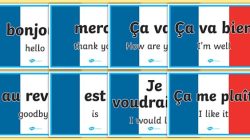
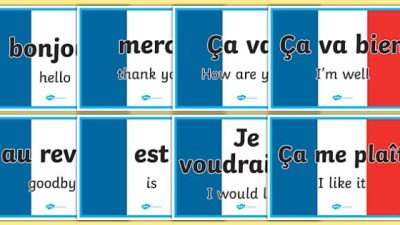
| Bonjour | The all-purpose “hello.” | Use it until about 6 p.m. It’s your default for entering a shop, greeting a colleague, or starting any conversation. |
| Salut | Informal “hi.” | For friends and family. It works as both “hi” and “bye.” |
| Bonsoir | “Good evening.” | Use this as your standard greeting after 6 p.m. or when it starts getting dark. |
| Au revoir | The standard “goodbye.” | Literally “to the re-seeing.” It’s polite and works in almost any situation. |
| Bonne journée | “Have a good day.” | A warm way to end a morning or early afternoon interaction, like when leaving a store. |
| Bonne soirée | “Have a good evening.” | The evening equivalent of Bonne journée. |
| À bientôt | “See you soon.” | A friendly, slightly less formal goodbye than Au revoir. |
| À tout à l’heure | “See you in a bit.” | Use this only if you will genuinely see the person again within a few hours. |
| Getting these basics right is a huge step. Once you feel comfortable, you can begin to explore the richer world of sayings and expressions. To build a comprehensive foundation, you can Master everyday French with a broader guide to popular sayings. |
Phrases That Oil the Wheels of Conversation
Politeness is paramount in French culture. These phrases are non-negotiable for smooth interactions.
Essential Courtesies
- Merci / Merci beaucoup: “Thank you / Thank you very much.”
- De rien: “You’re welcome.” This is the most common, everyday response.
- Il n’y a pas de quoi: Also “You’re welcome,” but it can mean “Don’t mention it” or “It was nothing.” It implies the favor was no trouble at all.
- S’il vous plaît / S’il te plaît: “Please” (formal/plural vs. informal).
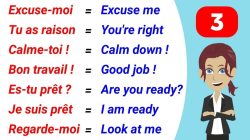
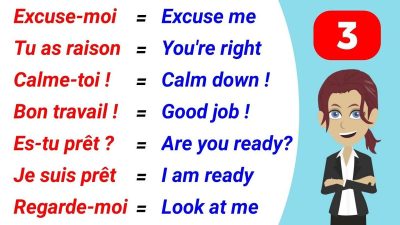
- Excusez-moi: “Excuse me.” Use this to get someone’s attention (e.g., a waiter).
- Pardon: “Pardon me” or “Sorry.” Use this if you bump into someone.
- Je suis désolé(e): “I am sorry.” This is for a more significant apology. The extra ‘e’ is added if the speaker is female.
Keeping the Conversation Going
The question “Ça va ?” (How’s it going?) is a cornerstone of French small talk. The expected rhythm is a simple call and response:
Person 1: “Salut, ça va ?“
Person 2: “Oui, ça va, et toi ?” (Yes, it’s going well, and you?)
Person 1: “Ça va.“
You don’t need to give a detailed account of your day. The exchange is more of a social ritual, a way of acknowledging each other before moving on.
Adding Flavor: Idioms That Make You Sound Native
Once you have the basics down, weaving in an idiom or two is the fastest way to impress. These phrases show you understand not just the language, but the culture behind it.
Common Wisdom and Advice
- Battre le fer pendant qu’il est chaud: “Strike the iron while it’s hot.” Use this to talk about seizing an opportunity.
- Example: “The client is interested now. Il faut battre le fer pendant qu’il est chaud !“
- Ce n’est pas la mer à boire: “It’s not like drinking the sea.” This is a fantastic way to say “It’s not a big deal” or “It’s not that difficult.”
- Example: “You just have to fill out one form. Ce n’est pas la mer à boire.“
- La nuit porte conseil: “The night brings advice.” The French equivalent of “sleep on it.”
- Example: “Don’t decide now. La nuit porte conseil.“
- L’habit ne fait pas le moine: “The robe doesn’t make the monk.” This means “Don’t judge a book by its cover.”
Food-Related Expressions
Given France’s culinary obsession, it’s no surprise that many idioms involve food.
- Raconter des salades: “To tell salads.” This means to tell lies or tall tales.
- Example: “He said he met the president? Je pense qu’il raconte des salades.” (I think he’s making things up.)
- S’occuper de ses oignons: “To take care of one’s own onions.” The classic way to say “Mind your own business.”
- Tomber dans les pommes: “To fall in the apples.” A charming expression for “to faint” or “to pass out.”
Animal-Themed Idioms
- Poser un lapin: “To place a rabbit.” This means to stand someone up for a date or appointment.
- Example: “I waited for an hour, but she never came. Elle m’a posé un lapin.“
- Avoir une araignée au plafond: “To have a spider on the ceiling.” This means to be a bit crazy or have a screw loose.
- Il n’y a pas de quoi fouetter un chat: “There’s no reason to whip a cat.” Another great way to say “It’s not a big deal.”
Your Practical Playbook: A Cheat Sheet for Common Scenarios
Let’s put the best French phrases into action. Here’s a quick guide for situations you’ll definitely encounter.
Situation 1: At a Café or Restaurant
- To get a table: “Bonjour, une table pour deux, s’il vous plaît ?” (Hello, a table for two, please?)
- To order: “Je vais prendre…” (I will have…) or “Je voudrais…” (I would like…).
- To get the waiter’s attention: Make eye contact and say, “Excusez-moi !“
- To ask for the bill: “L’addition, s’il vous plaît.” (The bill, please.)
- When you’re enjoying your meal: If the waiter asks, “Ça vous a plu ?“, you can respond, “Oui, c’était délicieux !” (Yes, it was delicious!)
Situation 2: Asking for Help
- To signal you don’t understand: “Je ne comprends pas.” (I don’t understand.)
- To ask someone to speak slower: “Pouvez-vous parler plus lentement, s’il vous plaît ?” (Can you speak more slowly, please?)
- To ask for the meaning of a word: “Qu’est-ce que ça veut dire ?” (What does that mean?)
- If you’re lost: “Pardon, je suis perdu(e). Où est la station de métro ?” (Pardon me, I’m lost. Where is the metro station?)
Quick Answers to Common Questions
Q: Is it really that bad to use tu instead of vous?
A: It’s not a disaster, but it can be perceived as overly familiar or even disrespectful, especially with older generations or in professional settings. The other person will likely understand you’re a learner, but they may gently correct you by continuing to use vous in their reply. Just switch and move on.
Q: What’s the deal with “Ooh la la”? Do people actually say it?
A: Yes, but not in the cartoonish, exaggerated way often portrayed in English media. French people say “Oh là là” to express a range of mild emotions, from surprise (“Oh là là, c’est cher !” – Wow, that’s expensive!) to disappointment or frustration. It’s more of a general exclamation than a statement of sexiness or shock.
Q: What are some good “filler” words to sound more natural?
A: Absolutely! Instead of “um,” try using words like:
- Alors… (So… / Well…)
- Bref… (In short… / Anyway…)
- Du coup… (So, as a result…)
- Euh… (The direct equivalent of “um” or “uh.”)
Using these small words shows you’re thinking in French and helps bridge the gaps in your sentences, making your speech sound much more authentic.
Your Path Forward
Learning a language is about collecting keys that unlock different doors. The best French phrases are your master keys to daily conversation. They move you from a passive observer to an active participant.
Don’t try to memorize all these at once. Pick three or four that you find interesting—perhaps one greeting, one idiom, and one politeness phrase. Make it your mission to use them in the next week. Write them on a sticky note. Practice them with a language partner. The goal is to make them an automatic part of your French toolkit, ready to be deployed to make every conversation richer and more rewarding. Bonne chance ! (Good luck!)