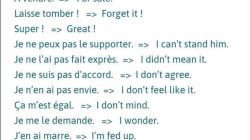
You’re standing in a bustling Parisian boulangerie, the scent of fresh croissants in the air, but a knot of anxiety tightens in your stomach. You know what you want, but the words escape you. Mastering a few key french phrases to know is the difference between pointing awkwardly and confidently saying, “Bonjour, je voudrais un pain au chocolat, s’il vous plaît.” It transforms you from a passive tourist into an engaged visitor, opening doors to warmer, more authentic interactions.
This isn’t about becoming fluent overnight. It’s about learning the specific conversational building blocks that show respect, navigate daily situations, and turn a simple transaction into a pleasant human exchange.
At a Glance: Your Toolkit for Real French Conversations
- Master the “Politeness Protocol”: Learn why Bonjour and vous are non-negotiable for respectful interactions.
- Ask Questions Like a Pro: Go beyond “yes” and “no” with the essential question words that get you the information you need.
- Handle Communication Gaps Gracefully: Know exactly what to say when you don’t understand, without feeling embarrassed.
- Navigate Key Scenarios: Get practical, plug-and-play phrases for ordering in a café, asking for directions, and shopping.
- Build Genuine Rapport: Discover the small phrases that go beyond transactions to leave a positive, lasting impression.
The Politeness Protocol: Your Foundation for Every Interaction
In France, politeness isn’t just a nicety; it’s the expected entry fee for any social interaction, from buying a metro ticket to asking for directions. Getting this right signals respect and immediately sets a positive tone.
First, always greet and say goodbye. Entering any shop, café, or even an elevator without a crisp Bonjour (or Bonsoir in the evening) is considered quite rude. When you leave, a simple Au revoir and Bonne journée! (Have a good day!) makes a world of difference. While this guide will equip you with specific phrases, our broader guide to help you Speak French like a local covers the full spectrum of essential greetings.
The Crucial Choice: Tu vs. Vous
This is the single most important cultural nuance to grasp. Using the wrong one can feel jarring to a native speaker.
- Vous: This is the formal “you.” Use it for everyone you don’t know, regardless of age. This includes shopkeepers, waiters, police officers, and older individuals. It’s your default, safe choice.
- Tu: This is the informal “you.” Reserve it for friends, family, children, and people who have invited you to use it. Using tu with a stranger can come across as overly familiar or even disrespectful.
Practical Example: - To a shopkeeper: Excusez-moi, vous avez l’heure, s’il vous plaît? (Excuse me, do you have the time, please?)
- To a friend: Tu as l’heure, s’il te plaît? (Do you have the time, please?)
When in doubt, always, always default to vous.
Breaking the Ice: How to Start a Real Conversation
Once you’ve nailed the initial greeting, you can move into simple conversational territory. The key is to keep it simple and show you’re trying.
A formal “How are you?” is Comment allez-vous? A friendly, more common version you’ll hear is simply Ça va? (How’s it going?). The brilliant part is that the answer can also be Ça va. (It’s going well.)
Here’s a mini-dialogue for introducing yourself:
- You: Bonjour, je m’appelle [Your Name]. (Hello, my name is [Your Name].)
- Them: Enchanté(e). Je m’appelle [Their Name]. (Pleased to meet you. My name is [Their Name].)
- You: Comment allez-vous? (How are you?)
- Them: Très bien, merci. Et vous? (Very well, thanks. And you?)
If you want to ask where they’re from, you can use the informal Tu viens d’où? or the more formal construction when appropriate. These simple exchanges are the bedrock of connection.
Handling Communication Gaps Gracefully
Panic sets in when a local responds with a rapid-fire stream of French. Don’t freeze. Having phrases to manage this moment is empowering.
Your most valuable phrase is Je ne comprends pas (I don’t understand). It’s clear, direct, and universally understood.
Here are your go-to tools for hitting the brakes on a conversation:
- To slow someone down: Parlez plus lentement, s’il vous plaît. (Speak more slowly, please.)
- To ask for a word’s meaning: Qu’est-ce que ça veut dire? (What does that mean?)
- To admit your limitations: Je ne parle pas beaucoup de français. (I don’t speak much French.)
And if you truly need to switch languages, the polite way is to ask, not assume: Parlez-vous anglais? (Do you speak English?). Asking in French first shows effort and is far more appreciated than simply launching into English.
The Art of Asking: Getting What You Need in Any Situation
The core of most travel interactions involves asking for something: a price, a location, a table. Mastering a few key question structures will get you through 90% of these scenarios.
The Essential Question Words
Think of these as your skeleton keys to unlocking information.
| French | English | Example Usage |
|---|---|---|
| Où? | Where? | Où sont les toilettes? (Where are the toilets?) |
| Quand? | When? | Quand part le train? (When does the train leave?) |
| Combien? | How much/many? | Combien ça coûte? (How much does it cost?) |
| Pourquoi? | Why? | Pourquoi le musée est-il fermé? (Why is the museum closed?) |
| Comment? | How? | Comment allez-vous à la gare? (How do you get to the station?) |
Practical Scenarios: A Mini-Playbook
1. In a Restaurant or Café:
- Getting a table: Bonjour, une table pour deux personnes, s’il vous plaît. (Hello, a table for two people, please.)
- Ordering: The magic phrase is Je voudrais… (I would like…). Example: Je voudrais un café et un croissant.
- Asking for the bill: L’addition, s’il vous plaît. (The bill, please.)
- Asking for a recommendation: Qu’est-ce que vous recommandez? (What do you recommend?)
Pro Tip: In France, le menu typically refers to a fixed-price meal (e.g., appetizer + main course for a set price), while la carte is the full à la carte menu. If you just want the full menu, ask for la carte.
2. Asking for Directions:
- Start with: Excusez-moi, je suis perdu(e). (Excuse me, I’m lost.)
- Ask for the location: Je cherche la station de métro. (I’m looking for the metro station.) Or more directly: Où est le musée du Louvre? (Where is the Louvre museum?)
- Understand the answer: Listen for keywords like à droite (to the right), à gauche (to the left), and tout droit (straight ahead).
3. Shopping: - Asking the price: C’est combien? or Combien ça coûte? (How much is it?)
- Indicating what you want: Je voudrais cela. (I would like that one.)
- Paying: You might be asked if you’re paying par carte (by card) or en espèces (in cash).
Quick Answers to Common Questions
Q: What’s the most important French phrase to know?
Without a doubt, Bonjour. It’s the key that unlocks almost every interaction. Using it when you enter a shop or café is a fundamental sign of respect. Forgetting it can lead to service that feels chilly or disinterested.
Q: How do I say “sorry” in French?
It depends on the context. For a small bump or getting someone’s attention, a simple Pardon or Excusez-moi is perfect. For a more sincere apology where you’ve made a real mistake, use Je suis désolé(e). (Note the extra ‘e’ if you are female).
Q: Is it rude to ask ‘Parlez-vous anglais?’ right away?
It’s not inherently rude, but it’s far more polite to lead with a French greeting first. A simple “Bonjour. Excusez-moi, parlez-vous anglais?” shows you’re making an effort and respecting the local language, which is always appreciated.
Q: Why do French people say ‘si’ instead of ‘oui’?
Si is used to say “yes” specifically to contradict a negative question. If someone asks, “Tu ne viens pas?” (You aren’t coming?), and you are coming, you would reply, “Si, je viens.” (Yes, I am coming). It’s a way of clarifying an incorrect negative assumption. In all other cases, oui is the standard “yes.”
Your Actionable Takeaway
Don’t feel pressured to memorize a dictionary. Instead, focus on mastering just 15 core phrases. Write them on a small card and keep it in your pocket.
Your “Survival 15” Starter Pack:
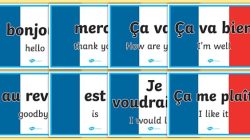
- Bonjour / Bonsoir (Hello / Good evening)
- Au revoir (Goodbye)
- S’il vous plaît (Please)
- Merci beaucoup (Thank you very much)
- Pardon / Excusez-moi (Pardon / Excuse me)
- Oui / Non / Si (Yes / No / Yes-to-a-negative-question)
- Je ne comprends pas (I don’t understand)
- Parlez-vous anglais? (Do you speak English?)
- Je voudrais… (I would like…)
- L’addition, s’il vous plaît (The bill, please)
- Où sont les toilettes? (Where are the toilets?)
- Combien ça coûte? (How much does it cost?)
- Je m’appelle… (My name is…)
- Comment allez-vous? (How are you?)
- Bonne journée! (Have a good day!)
Mastering these phrases won’t just help you order coffee; it will fundamentally change the quality of your trip. It shows you care, and in return, you’ll find locals are more patient, more helpful, and more welcoming. So take a deep breath, step into that boulangerie, and give it a try. You’ve got this.