Mastering a few key French language phrases can be the difference between a good trip to France and an unforgettable one. It’s not about achieving perfect fluency overnight; it’s about connection. Using the right phrase at the right time—politely asking for the bill, greeting a shopkeeper, or simply saying “excuse me”—shows respect and opens doors to more authentic interactions. You move from being a tourist to being a welcome guest.
This guide goes beyond the basic vocabulary list. We’ll dive into the nuances that will help you navigate daily situations with confidence and sound less like you’re reading from a textbook. We’ll cover the subtle art of formality, the conversational glue that makes you sound natural, and the practical phrases you’ll actually use in cafés, markets, and metro stations.
At a Glance: Your Path to Sounding More Natural
- Master the Art of Formality: Understand the crucial difference between the informal tu and the formal vous to show respect.
- Go Beyond Bonjour: Learn situational greetings and goodbyes to use throughout the day.
- Unlock Conversational Flow: Discover how simple “filler words” can make your speech sound less robotic and more authentic.
- Navigate Daily Scenarios: Get the exact phrases for ordering coffee, shopping at a boulangerie, and asking for directions without fumbling.
- Handle Misunderstandings Gracefully: Know what to say when you don’t understand, so you can keep the conversation going.
- Ask Questions Like a Native: Learn the three ways to form questions, including the most common spoken method.
The Unspoken Rule: Mastering Tu vs. Vous
Before you even say “hello,” the most important concept to grasp is the difference between tu and vous. Both mean “you,” but they signal different levels of social distance and respect. Getting this right is the first major step toward sounding culturally aware.
Think of it this way:
- Tu is for people you know well—friends, family, children, and peers in a very casual setting. It’s a sign of familiarity.
- Vous is your default setting. You use it for strangers, shopkeepers, restaurant staff, anyone older than you, and in any professional or formal context. It’s a sign of respect.
When in doubt, always start with vous. It is always safer to be too formal than too familiar. If a French person wants to switch to the more familiar tu, they will often say, “On peut se tutoyer?” (Can we use tu with each other?).
| Situation | Correct Form | Example Phrase |
| :— | :— | :— |
| Ordering from a barista | Vous | Bonjour, je vais vous prendre un café, s’il vous plaît. |
| Asking a stranger for directions | Vous | Excusez-moi, où se trouve le musée du Louvre, s’il vous plaît? |
| Chatting with a new friend your age at a hostel | Tu | Salut, tu viens d’où? |
| Speaking to a child | Tu | Comment t’appelles-tu? |
Greetings and Goodbyes for Every Occasion
While Bonjour is a perfect all-purpose greeting, using a few other key phrases shows you have a better grasp of the language and its rhythms.
The Hellos:
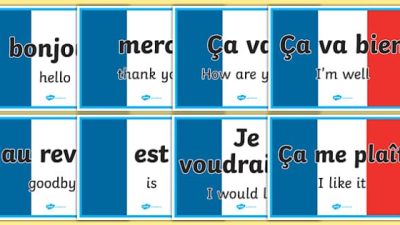
- Bonjour: The classic “hello” or “good day.” Use it until the late afternoon. You can never go wrong with Bonjour. It’s a must when entering any shop or café.
- Bonsoir: Once evening rolls around (around 6 PM), switch from Bonjour to Bonsoir for “good evening.”
- Salut: A very informal “hi.” Use this only with friends, young people, or people you would address with tu. It’s also used for “bye” in the same casual contexts.
The Goodbyes (These are crucial and often missed by learners): - Au revoir: The all-purpose, safe-for-all-situations “goodbye.” It literally means “until we see again.”
- Bonne journée: “Have a good day.” This is said when you are leaving a place in the morning or afternoon. The shopkeeper will say it to you as you exit.
- Bonne soirée: “Have a good evening.” This is the evening equivalent of Bonne journée, used when parting ways.
- Bonne nuit: “Good night.” This is only used right before someone is going to bed, not as a general evening goodbye.
- À bientôt: “See you soon.” A friendly, general way to say you expect to see them again.
- À plus tard / À plus!: “See you later.” The full phrase (À plus tard) is standard, while the shortened À plus (pronounced “ah-ploos”) is very informal slang used among friends.
Local Tip: A common mistake is using Bonne journée as a greeting. Remember, it’s a farewell. You walk into the bakery and say “Bonjour, Madame.” You walk out with your croissant and say, “Merci, bonne journée!“
The Secret Ingredient: Sounding Natural with “Filler” Words
Robotic, perfectly grammatical sentences are a dead giveaway that you’re a learner. Native speakers fill their speech with small words and sounds that buy them time to think and create a natural rhythm. Sprinkling these into your speech is a game-changer.
- Euh…: The French equivalent of “Um…” or “Uh…” Perfectly normal to use when you’re searching for a word.
- Alors…: Means “so…” or “well then…” It’s a great way to start a sentence or transition your thought. “Alors, je vais prendre le plat du jour.” (So, I’ll have the daily special.)
- Ben…: A very common, informal “well…” It’s softer than Alors. “Ben, je ne sais pas.” (Well, I don’t know.)
- Bref…: Means “anyway…” or “in short…” Used to summarize or get to the point.
- Voilà: A wonderfully versatile word. It can mean “there it is,” “here you go,” or simply be used to add emphasis at the end of a statement, like “that’s it.”
Using these small words shows you’re comfortable with the flow of a real conversation. For a complete list of foundational vocabulary to build upon, you can learn to Speak French like a local with our broader guide.
Your Practical Playbook for Daily Life
Let’s put these phrases into action in the scenarios you’ll encounter every day.
Navigating the Café and Restaurant Scene
Ordering food and drinks is one of the most common and rewarding interactions you’ll have.
- Getting a table: “Bonjour, une table pour deux, s’il vous plaît?” (Hello, a table for two, please?)
- Ordering your food/drink: While “Je voudrais…” (I would like…) is perfectly correct, locals often use the more direct “Je vais prendre…” (I’m going to have…). For example: “Je vais prendre un café crème et un croissant.”
- Getting the waiter’s attention: A simple and polite “Excusez-moi?” is all you need.
- Asking for the bill: The classic phrase is “L’addition, s’il vous plaît?” (The bill, please?).
- Complimenting the meal: “C’était délicieux!” (It was delicious!). This is always appreciated.
Shopping at a Market or Boulangerie
Interactions in small shops are a key part of French culture. Politeness is paramount.
- Always greet the shopkeeper upon entering: “Bonjour, Madame/Monsieur.” This is non-negotiable.
- State what you want: If you can point, the easiest phrase is “Je vais prendre ça, s’il vous plaît.” (I’ll take that, please.).
- Asking the price: “C’est combien?” (How much is it?).
- Finishing the transaction: As you leave, always say “Merci, au revoir et bonne journée!”
Real-World Scenario: You enter a bakery.
You: “Bonjour, Monsieur.”
Baker: “Bonjour, Madame.”
You (pointing): “Je vais prendre une baguette, s’il vous plaît.”
Baker: “Voilà. Ce sera tout?” (Here you go. Will that be all?)
You: “Oui, merci. C’est combien?”
Baker: “Un euro vingt.”
(You pay)
You: “Merci beaucoup. Bonne journée!”
Baker: “Merci, à vous aussi. Au revoir.”
Asking for Directions and Using Transport
Even with GPS, you’ll sometimes need to ask for help. Keep your questions short and simple.
- The simple approach: “Excusez-moi, pour aller à la gare, s’il vous plaît?” (Excuse me, to get to the train station, please?). This is more natural than a long sentence.
- Understanding the answer: Listen for these key words:
- à gauche (to the left)
- à droite (to the right)
- tout droit (straight ahead)
- Buying metro tickets: At a ticket window, you can ask for “Un carnet, s’il vous plaît”—this is a book of 10 tickets, which is cheaper than buying them individually.
Quick Answers: Your French Phrase Questions, Answered
Q: Is it rude to just start speaking English?
A: Yes, it can be perceived as rude. The golden rule is to always begin an interaction in French, even if it’s just a simple “Bonjour. Excusez-moi, parlez-vous anglais?” (Hello. Excuse me, do you speak English?). This small effort shows respect for the local language and culture and will get you a much warmer response.
Q: What’s the real difference between De rien and Je vous en prie?
A: Both mean “You’re welcome.” De rien (literally “it’s nothing”) is the common, everyday response. Think of it like “no problem.” Je vous en prie is more formal and polite. You might hear it from a waiter at a nice restaurant. If someone thanks you profusely, Je vous en prie is a great response.
Q: What if I don’t understand what someone said?
A: Don’t panic and don’t just say “Je ne comprends pas” (I don’t understand) and stop. This can halt the conversation. Instead, ask for help:
- “Pourriez-vous répéter, s’il vous plaît?” (Could you repeat, please?)
- “Pourriez-vous parler plus lentement, s’il vous plaît?” (Could you speak more slowly, please?)
This shows you’re still engaged and trying to understand.
Q: I accidentally used tu with a shopkeeper. Is it a huge deal?
A: No, it’s not a disaster. Most French people will instantly recognize you as a non-native speaker and will not be offended. They might gently correct you or simply reply using vous. The best thing to do is just make a mental note and switch to vous for the rest of the conversation. A quick “Pardon” can smooth things over.
Your First Steps to Sounding More French
You don’t need a massive vocabulary to make a great impression. Focus on the high-impact phrases and cultural nuances that show you’re making an effort.
- Lead with Politeness: Always, always begin any interaction with “Bonjour, Madame/Monsieur.” It’s the key that unlocks every conversation.
- Default to Vous: When in doubt, use vous. It’s the safest and most respectful choice.
- Embrace the Flow: Pick one or two “filler words” like Alors or Ben and try to use them. It will instantly make you sound less rehearsed.
- Master Your Goodbyes: End every single interaction in a shop or café with “Merci, bonne journée!” (or bonne soirée). It completes the circle of politeness.
By focusing on these core french language phrases and the context behind them, you’re not just translating words; you’re learning to participate in the culture. That effort, no matter how small, will be noticed and appreciated, transforming your travels from a passive experience to an active, engaging adventure.