Jumping into a new language can feel like staring up at a mountain, but the first step isn’t learning complex grammar—it’s mastering a handful of basic French words. These core building blocks are your key to unlocking simple, meaningful interactions, from ordering a coffee in a Parisian café to simply greeting a shopkeeper. With just a few essential words, you can transform from a silent tourist into an engaged traveler, showing respect and opening the door to genuine connection.
This guide is your first step. We’ll skip the dense textbooks and focus on the high-impact words you can learn and use today.
At a Glance: What You’ll Learn
- The Politeness Trinity: The three words you absolutely must know before you go.
- Essential Greetings & Farewells: How to start and end any conversation gracefully.
- Your First “Sentences”: Simple verbs and connectors to string words together.
- The Question Toolkit: The core words needed to ask for directions, prices, and help.
- A Pronunciation Primer: Simple tricks to sound more natural and be understood.
- Cultural Context: Understanding when and how to use these words correctly.
The Foundation: Your Politeness Essentials
If you learn nothing else, learn these words. Politeness is the bedrock of French social interaction. Simply starting an exchange with Bonjour and ending with Merci can completely change the tone of your experience. Locals will be far more receptive and helpful if you make this small effort.
These words are so fundamental that they form the base of nearly every interaction. Once you have them down, you can start combining them into longer, more nuanced expressions and truly begin to Speak French like a local.
| English | French | Pronunciation (Approx.) | When to Use It |
|---|---|---|---|
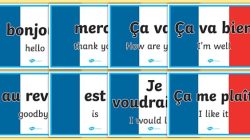
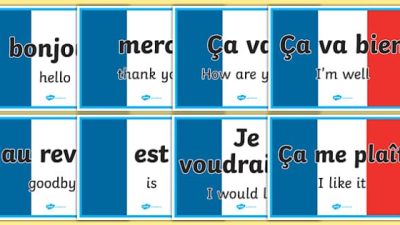
| Hello | Bonjour | bon-zhoor | The universal greeting. Use it when entering a shop, café, or starting any conversation during the day. |
| Please | S’il vous plaît | seel voo play | The formal “please.” Use it when asking for anything, from a menu to directions. Abbreviated as S.V.P. |
| Thank you | Merci | mehr-see | The essential expression of gratitude. Say it often. |
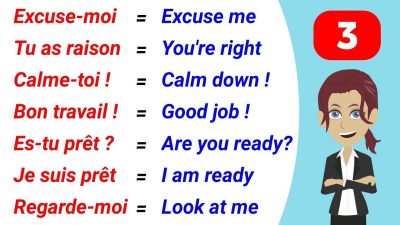
| Excuse me | Excusez-moi | ex-kew-zay mwah | Use this to get someone’s attention, apologize for bumping into them, or politely interrupt. |
| Yes / No | Oui / Non | wee / nohn | Simple, direct, and universally needed. The “n” in non is a soft, nasal sound. |
| You’re welcome | De rien | duh ree-en | The most common and casual response to “Merci.” Literally “it’s nothing.” |
| Real-World Scenario: You walk into a bakery. |
- You: Bonjour! (Hello!)
- Baker: Bonjour!
- You: Un croissant, s’il vous plaît. (One croissant, please.)
- (Baker gives you the croissant.)
- You: Merci! (Thank you!)
- Baker: De rien. (You’re welcome.)
Greetings and Goodbyes: The Bookends of Conversation
Knowing how to properly start and end a conversation shows respect and social awareness. French culture places a high value on these small pleasantries.
- Bonsoir (bon-swahr) – Good evening. The evening equivalent of Bonjour. Typically used after 6 PM.
- Salut (sah-loo) – Hi / Bye. This is very informal. Use it only with friends, family, or people your age in casual settings. Avoid using it with shopkeepers or officials.
- Au revoir (oh ruh-vwahr) – Goodbye. The standard, safe way to say goodbye to anyone.
- Bonne journée (bun zhoor-nay) – Have a good day. A warm and friendly way to end a morning or afternoon exchange.
- Bonne soirée (bun swahr-ay) – Have a good evening. The evening version of the above.
- Bonne nuit (bun nwee) – Good night. This is specifically for when someone is going to bed, not just a general evening farewell.
Building Blocks: Verbs, Pronouns, and Connectors
Once you have the pleasantries down, the next step is to start forming simple ideas. These are the LEGO bricks of your first French sentences.
Key “I” Statements
These words help you express your needs, state, or identity.
- Je suis… (zhuh swee) – I am…
- Je suis désolé(e). (I am sorry.)
- Je suis perdu(e). (I am lost.)
- Je suis américain(e). (I am American.)
- Note: Add an “-e” at the end of adjectives like désolé, perdu, américain if you are female.
- Je voudrais… (zhuh voo-dray) – I would like… This is a more polite and common way to ask for something than “Je veux” (I want).
- Je voudrais un café. (I would like a coffee.)
- Je voudrais une table pour deux. (I would like a table for two.)
- J’ai… (zhay) – I have…
- J’ai une réservation. (I have a reservation.)
Simple Connectors
- Et (ay) – And
- Ou (oo) – Or
- Avec (ah-vek) – With
- Sans (sohn) – Without
Putting it together: Je voudrais un café et un croissant, s’il vous plaît. (I would like a coffee and a croissant, please.)
The Question Toolkit: Finding What You Need
Being able to ask questions is your superpower as a traveler. These five words are the key to unlocking information.
| English | French | Pronunciation | Example Usage |
|---|---|---|---|
| Where? | Où? | oo | Où sont les toilettes? (Where are the restrooms?) |
| How? | Comment? | ko-mohn | Comment dit-on ___ en français? (How do you say ___ in French?) |
| How much? | Combien? | kom-byen | Combien ça coûte? (How much does it cost?) |
| When? | Quand? | kohn | Quand part le train? (When does the train leave?) |
| What? | Quoi? / Qu’est-ce que? | kwah / kess-kuh | Qu’est-ce que c’est? (What is it?) |
| Pro Tip: You can often turn a statement into a question by raising your intonation at the end. For example, Vous parlez anglais? (You speak English?) is a question formed from the statement “You speak English.” |
Quick Answers to Common Questions
Got a nagging question about these basic words? Here are some rapid-fire answers.
What are the 10 most essential French words for a tourist?
- Bonjour (Hello)
- Merci (Thank you)
- S’il vous plaît (Please)
- Excusez-moi (Excuse me)
- Oui (Yes)
- Non (No)
- Au revoir (Goodbye)
- L’addition (The bill/check)
- Toilettes (Restrooms)
- Anglais (English) – as in, Parlez-vous anglais?
Is it rude to just say S’il vous plaît?
Not at all, but it’s much better to pair it with Bonjour first and a noun. Instead of just “Please,” which can sound demanding, say “Bonjour. Un café, s’il vous plaît.” Context and a greeting make all the difference.
Why do French people say ça va? so often?
Ça va? (sah vah) is a versatile phrase meaning “How are you?,” “Is it going okay?,” or even just “Okay.” As a cultural ritual, it’s often more of a greeting than a genuine inquiry into your well-being. A simple “Ça va bien, merci.” (I’m well, thank you) is the standard reply.
What’s the difference between tu and vous?
This is a critical cultural distinction. Both mean “you.”
- Vous: Use this as your default. It’s the formal/plural “you.” Use it with strangers, shopkeepers, officials, and anyone older than you. It shows respect.
- Tu: This is the informal, singular “you.” Use it with friends, family, children, and peers you know well. Using tu with a stranger can be seen as overly familiar or even rude. When in doubt, always use vous.
Your Pronunciation Playbook
Don’t worry about sounding perfect. The goal is to be understood. Here are a few simple rules that will drastically improve your pronunciation of basic French words.
- Silent Endings: Many consonants at the end of words are silent, especially -s, -t, -d, and -x. For example, petit (small) is pronounced “puh-tee,” not “puh-teet.”
- The Nasal Sound: Vowels followed by an “n” or “m” often create a nasal sound, where the air passes through your nose. Think of the words bon (“bohn”), sans (“sohn”), and vin (“vahn”). Don’t pronounce the “n” or “m” hard; let it flavor the vowel.
- The French “R”: This is the toughest for English speakers. It’s not rolled with the tongue. The sound is made in the back of the throat, almost like a light gargle or clearing your throat. Listen to native speakers say merci or au revoir to get a feel for it.
- The Silent “H”: The letter “h” is almost always silent in French. Hôtel is pronounced “oh-tel,” and hôpital is “oh-pee-tahl.”
Your First French Conversation: A Simple Script
Ready to put it all together? You now have enough basic French words to handle a simple, successful transaction. Walk into any café or bakery and try this.
- Start with a greeting:
Bonjour!
- Make your request (politely):
Un café, s’il vous plaît. (Or un croissant, une baguette…)
- End with thanks:
Merci. Bonne journée!
That’s it. Three simple lines. This small exchange, using just a few of the words you’ve learned here, is a massive step. It shows respect, engages with the culture, and proves you can start speaking French today. Each time you do it, your confidence will grow, paving the way for richer conversations and a more rewarding journey.